Call Us: +860573-87998299
E-mail: sales@semixhealth.com
 English


×
Search


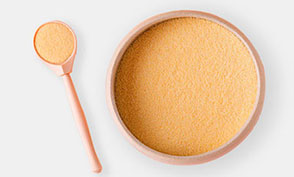
SEMIX bovine collagen peptide, produced by Zhejiang Xinmei Biotechnology Co., Ltd., is a hydrolyzed collagen ingredient for food, beverage and nutritional supplement formulations. Its typical protein content is over 92 g per 100 g. Contact SEMIX to discuss product specifications, sample availability and bulk purchasing requirements for your formulation project.
Item | Typical values per 100g |
Calories | 386KCal |
Total Fat | 0 |
Protein | >92 g |
Total Carbohydrates | 0 |
Sodium | <100mg |
Cholesterol | 0 |
Sugar | 0 |
Fiber | 0 |
Vit. D | 0 |
Vit. A | 0 |
Vit. C | 0 |
Calcium | 0 |
Iron | <10ppm |
Potassium | 0 |

SEMIX uses PRO-SEMIX technology to support batch-to-batch consistency of its bovine collagen peptide products, helping manufacturers reduce variation during formulation and production. For qualification, request the current product specification and batch testing documents for the grade under review.
For bulk projects, SEMIX can match bovine collagen peptide grades to application requirements and provide samples, specifications and commercial quotations for evaluation.
Beverages: Use bovine collagen peptide in coffee mixes, powdered beverages and other drink systems where a collagen ingredient is required. Confirm dispersion and temperature requirements for the selected grade during formulation testing.
Cold-dispersion projects: If rapid dispersion in cold beverages is required, compare the Instant Bovine Collagen Peptide grade and confirm the grade-specific solubility data before approval.
Nutraceuticals: Bovine collagen peptide can be evaluated for powder blends, sachets, tablets or capsules according to dosage form, serving size and formulation requirements.
Food & Bakery: Evaluate bovine collagen peptide for protein bars, desserts and other fortified foods. When selecting collagen powder for baking for products such as pancakes, muffins, cakes and brownies, confirm processing compatibility, sensory targets and the required inclusion level in your formulation.
Start with the intended amount of bovine collagen peptide per serving and the space required for other ingredients. For capsules, check whether the blend fits the selected capsule size at a practical capsule count. For sachets, assess the total serving weight and preparation method. Confirm the chosen format through filling trials with the actual blend.
When sourcing bovine collagen from China, calculate your sample requirements based on trial batch size, inclusion level and the number of planned trials. For example, three 2 kg trial batches with a 5% inclusion level require 300 g before allowing for handling losses, additional testing and retained samples. This percentage is a calculation example, not a recommended inclusion level. Contact SEMIX to confirm sample availability and the quantity needed for your development plan.
Check blend uniformity rather than relying on appearance alone. Sample different locations in the mixer and different stages of discharge, using an analytical method that can distinguish the ingredient or a suitable validated marker. Total protein testing alone may not distinguish collagen distribution when other protein ingredients are present.
Establish the addition stage through trials with the complete formulation. Compare adding the powder to the initial liquid phase with adding it later in the process, while keeping the formulation and evaluation criteria consistent. Record powder wetting, lump formation, foam and mixing time, then use the results to define a repeatable addition sequence.
Recheck the mixing sequence, powder addition rate, mixing time, temperature profile and transfer or filling steps on the intended equipment. Compare the pilot product with the approved laboratory reference for appearance, taste and relevant processing results. Record any adjustments before setting the commercial production procedure.
Tel : +860573-87998299
Email : sales@semixhealth.com
Address: No. 18 Hangping Road, Haining City, Zhejiang Province
+860573-87998299