Call Us: +860573-87998299
E-mail: sales@semixhealth.com
 English

×
Search
The finishing of textiles determines the performance of the fabric after weaving, knitting, printing, or dyeing. Depending on the type of fiber and the end-use, manufacturers may need to improve the surface smoothness, moisture absorption, static control, color uniformity, or visual gloss of the fabric, while trying not to change the original structure of the textile.
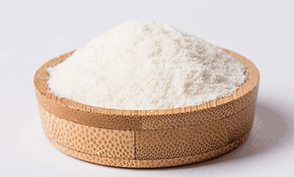
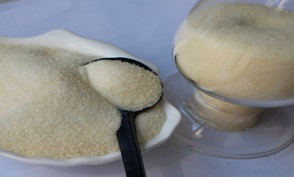
Hydrolyzed gelatin is a collagen derivative made through a controlled hydrolysis process. Beyond the food and personal care sectors, SEMIX also offers hydrolyzed gelatin for use in textile printing and dyeing, coating, and other industrial formulations. Its practical applicability depends on molecular weight, solubility, usage concentration, fiber type, the composition of the treatment liquid, and the durability of the desired finishing effect.
Synthetic fibers such as polyester have good strength, dimensional stability, and abrasion resistance, but their surfaces are usually hydrophobic, which may present challenges in static accumulation, moisture absorption, and uniform adhesion of certain finishing agents.
Protein-based materials contain various polar functional groups that can interact with water, dyes, cross-linking agents, and suitably pretreated fiber surfaces. When incorporated into textile finishing systems, hydrolyzed gelatin is more suitable as a film-forming or surface-modifying component rather than as a structural fiber of the fabric.
Hydrolyzed gelatin can be used to enhance fiber gloss, reduce static electricity generated by synthetic fibers, and assist dyeing. However, these effects must be verified in complete finishing formulations, as gelatin-based materials without proper fixation may have insufficient wash or water resistance.
The interaction between hydrolyzed gelatin and textiles depends on the chemical properties and surface state of the fibers.
Cotton fibers contain hydrophilic groups that facilitate the wetting and deposition of aqueous finishing materials. Wool and other protein fibers have different ionic binding sites and hydrogen bond interaction sites. Synthetic fibers such as polyester and polypropylene may require cleaning, hydrolysis, plasma treatment, or the use of primers and coupling agents to ensure sufficient adhesion of protein-based finishing layers.
Related studies indicate that with appropriate pretreatment and bonding processes, gelatin-modified polyester fabrics can improve hydrophilicity and antistatic properties. This also implies that it cannot be assumed that hydrolyzed gelatin will directly form durable finishing effects on all synthetic fabrics.
Therefore, formulators need to comprehensively evaluate fiber composition, surface pretreatment, pH value of the treatment liquid, curing conditions, binder selection, and expected number of washes.
Static electricity is easily generated when the dry fabric surface rubs against machine parts or other fibers. This problem is usually more pronounced for synthetic fibers, low ambient humidity, high-speed processing, and insufficient surface conductivity.
Hydrophilic surface treatments can help fabrics absorb or retain small amounts of moisture from the air, thereby increasing surface conductivity and making it easier to dissipate accumulated charges. If proteins can effectively adhere to the fiber surface, gelatin-based treatments may improve the antistatic properties of polyester fabrics.
When developing antistatic finishing formulations, manufacturers should test:
Surface resistivity or volume resistivity
Static decay time
Performance under different humidity conditions
Performance after washing or abrasion
Fabric feel and stiffness
Color changes
Compatibility with softeners and other finishing agents
A lower initial resistance does not necessarily mean a better product. Commercial applications also need to confirm whether the antistatic effect can remain stable during processing, storage, and actual use.
The effectiveness of dye absorption depends on the relationship between the dye, fiber, pH, temperature, electrolyte concentration, additives, and available binding sites. Protein-based surface layers may introduce amino, carboxyl, and other polar groups that interact with specific types of dyes.
However, this does not mean that hydrolyzed gelatin can improve all dyeing processes. The actual effect will be influenced by the charge of the protein at the pH of the treatment liquid, dye ionic properties, fiber pretreatment, curing processes, and other chemicals.
Introducing suitable ionic groups on the surface of modified textiles helps to enhance their adsorption of oppositely charged dyes. Gelatin and other proteins may also bind to dye molecules through ionic interactions, hydrogen bonds, and other secondary forces.
In tests, one should not only observe color depth but also compare:
Color uptake rate
Dyeing uniformity
Wash fastness
Rubbing fastness
Color stability
Wastewater load
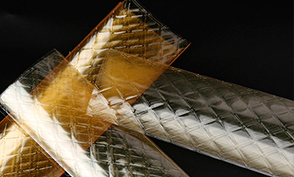
A uniform and thin finishing layer can influence how light reflects off the fiber surface. Protein-based additives, by filling in fine surface irregularities or forming a continuous film, may improve the smoothness and visual gloss of the fabric surface.
However, the final effect is highly dependent on the deposition uniformity of the finishing material. Excessive addition may make the fabric stiff, sticky, uneven, or turn yellow upon heating. Insufficient fixation may result in the finishing layer peeling off, poor wash resistance, or inconsistent feel.
Manufacturers should evaluate:
Fabric gloss or reflectivity
Surface smoothness
Softness and drape
Surface friction properties
Whiteness or hue changes
Yellowing after heat treatment
Odor
Durability after repeated use
The finishing effect needs to match the actual use of the fabric. Decorative fabrics may focus more on gloss, while apparel and upholstery fabrics need to balance appearance, comfort, and durability.
Hydrolyzed gelatin can be used in padding, dipping, coating, printing, and other aqueous textile treatment processes. The suitable application method depends on the fabric structure, target liquid pick-up rate, production equipment, and whether hydrolyzed gelatin is used alone or in combination with binders and cross-linking systems.
Important process variables include:
Addition concentration
Water quality
Dissolution temperature
pH of the treatment liquid
Liquid pick-up rate
Drying temperature
Curing conditions
Production line speed
It's also necessary to test its compatibility with dyes, surfactants, softeners, resins, defoamers, antimicrobial agents, or flame retardants.
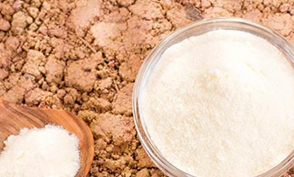
Protein powders have a certain hygroscopicity, so storage conditions and the solution preparation process need to be controlled. During use, the solution's viscosity, foam, microbial stability, filtration performance, and changes after prolonged storage should be monitored.
After laboratory tests, pilot trials using actual fabrics and production lines should be conducted to verify the fabric's performance after washing, friction, heating, or storage.
Before purchasing hydrolyzed gelatin for textile processing, the following information should be confirmed:
Raw material source
Molecular weight range
Protein content
Moisture
Ash content
Solubility
pH value
Particle size
Color
Odor
Microbial limits
Packaging method
Shelf life
Batch traceability
Purchase specifications should be developed based on textile processes, not just referencing food-grade or cosmetic-grade positioning. Even if a product has good nutritional properties, if the color, odor, solution viscosity, filtration performance, or molecular weight distribution do not meet the requirements of the finishing liquid, it may not be suitable for textile applications.
SEMIX offers bovine, porcine, and fish-sourced hydrolyzed gelatin and can discuss customized products according to customer requirements. The final product model and addition amount still need to be confirmed through actual textile trials, especially in applications requiring long-lasting antistatic properties, dyeing assistance, or surface effect improvement.
+860573-87998299